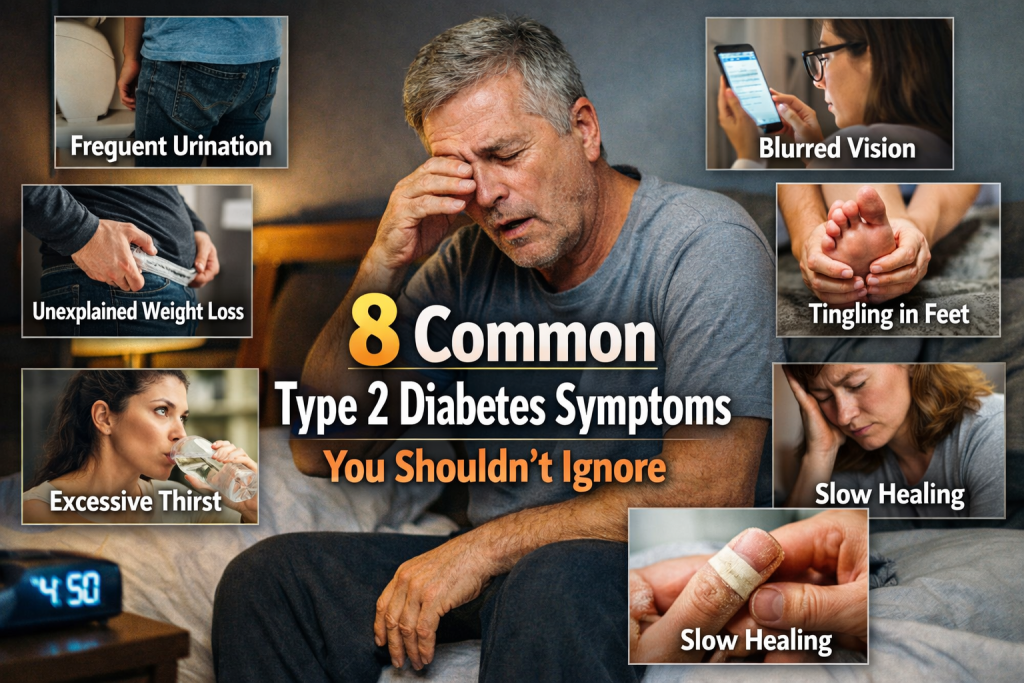
8 Common Type 2 Diabetes Symptoms You Shouldn’t Ignore
Type 2 diabetes often develops gradually, which is one reason many people miss the early signs. Symptoms can be mild at first, easy to brush off, or mistaken for everyday issues like stress, dehydration, poor sleep, or getting older. But knowing what to watch for matters. The sooner diabetes is recognized, the sooner a clinician can confirm it with blood tests and help lower the risk of complications. According to the CDC and NIDDK, common diabetes symptoms include frequent urination, increased thirst and hunger, fatigue, blurred vision, unplanned weight loss, and recurring infections, while many people with type 2 diabetes may have few or no obvious symptoms at first.
This guide walks through eight common type 2 diabetes symptoms, why they happen, and when it is smart to get checked.
1. Frequent urination
Needing to urinate more often than usual is one of the best-known warning signs of diabetes. This can show up as larger amounts of urine, more bathroom trips during the day, or waking up repeatedly at night to pee. The reason is straightforward: when blood sugar rises too high, the kidneys try to remove the excess glucose through urine, and extra water gets pulled along with it.
You may want to pay attention if you notice:
- a sudden increase in bathroom trips
- frequent nighttime urination
- feeling dehydrated even though you are drinking normally
Frequent urination can happen for many reasons, including urinary tract infections, certain medications, and drinking more caffeine or alcohol than usual. But when it shows up alongside thirst, fatigue, or blurry vision, diabetes becomes more important to rule out.
2. Constant thirst
Excessive thirst often goes hand in hand with frequent urination. As the body loses more fluid, it tries to correct the imbalance by making you feel thirsty. Some people describe this as a dry-mouth feeling that does not go away, or a sense that no amount of water really seems to satisfy them.
This symptom may look like:
- always wanting a drink nearby
- drinking much more than usual
- feeling thirsty again soon after finishing a beverage
On its own, thirst is not enough to diagnose anything. But thirst that persists for days, especially when paired with frequent urination, deserves attention.
3. Ongoing fatigue
Feeling unusually tired is another common complaint in people with diabetes. When the body cannot use insulin well, glucose stays in the bloodstream instead of moving efficiently into cells for energy. The result can be low energy, sluggishness, and trouble getting through normal daily tasks.
You might notice:
- feeling drained even after a full night’s sleep
- a drop in stamina
- difficulty focusing or staying alert
- a general sense of weakness
Fatigue is nonspecific and can stem from many causes, from lack of sleep to anemia to depression. Still, fatigue that keeps lingering without a clear reason should not be ignored, especially if other diabetes symptoms are present.
4. Feeling hungrier than usual
Increased hunger can happen even if you are eating enough. When glucose is not entering cells effectively, the body may behave as though it is running low on fuel, which can trigger stronger hunger signals. The CDC and NIDDK both list increased hunger among the common diabetes symptoms.
Some people notice:
- hunger soon after meals
- stronger cravings for carbohydrate-rich foods
- feeling unsatisfied even after eating normally
A bigger appetite does not always mean diabetes, but persistent hunger combined with fatigue, thirst, or unexplained weight changes is a good reason to speak with a healthcare professional.
5. Blurred vision
Blood sugar that stays high can temporarily change the shape of the eye’s lens by shifting fluid levels, which may make vision blurry. In some cases, people first realize something is wrong because reading, screen work, or focusing at different distances becomes harder than usual.
Blurred vision related to diabetes may feel like:
- trouble bringing text into focus
- vision that seems to come and go
- worsening clarity at certain times of day
Any persistent or sudden vision change should be checked promptly. While blood sugar may be one explanation, eye symptoms can also signal other conditions that need urgent care.
6. Slow-healing cuts and more frequent infections
High blood sugar can affect immune function and make it harder for the body to heal. Diabetes is also linked with more frequent infections, including urinary tract infections, yeast infections, and some skin or mouth problems. The CDC lists frequent UTIs or yeast infections among common diabetes symptoms, and Mayo Clinic notes that diabetes can leave people more prone to bacterial and fungal skin issues.
Watch for patterns like:
- cuts or scrapes that seem to linger
- repeated skin infections
- frequent yeast infections or UTIs
- gum irritation or recurring dental infections
This symptom matters because it can be easy to dismiss until it keeps happening. A recurring pattern is often more telling than one isolated infection.
7. Tingling or numbness in the hands or feet
Nerve symptoms such as tingling, burning, numbness, or reduced sensation can happen when high blood sugar damages nerves over time. This is often called diabetic neuropathy. Although nerve damage is more commonly discussed as a complication, some people with type 2 diabetes first come to medical attention because of symptoms in their feet or hands. NIDDK notes that diabetes-related nerve damage can affect the extremities and other body systems.
People often describe it as:
- pins-and-needles sensations
- burning discomfort
- numb toes or fingertips
- symptoms that seem worse at night
Numbness in the feet is especially important to mention to a clinician, since reduced sensation can make injuries easier to miss.
8. Unexplained weight loss
Although type 2 diabetes is often associated with overweight and obesity, unexplained weight loss can still be a symptom. If the body cannot use glucose properly, it may start breaking down fat and muscle for energy. The CDC includes losing weight without trying among common diabetes symptoms.
This may show up as:
- clothes fitting looser without trying
- weight dropping despite normal eating
- weight loss happening alongside increased hunger
Not everyone with type 2 diabetes loses weight. Some people gain weight or notice no change at all. But weight loss without an obvious reason should always be evaluated.
When symptoms may be easy to miss
One of the most important things to know about type 2 diabetes is that symptoms do not always appear quickly. NIDDK states that symptoms can develop slowly over several years, and many people have no symptoms or such mild symptoms that they do not notice them.
That means you should not wait for severe symptoms before getting checked, especially if you have risk factors such as:
- a family history of type 2 diabetes
- overweight or obesity
- a history of prediabetes
- high blood pressure
- previous gestational diabetes
- low physical activity
When to see a healthcare professional
Make an appointment if you have one symptom that persists or several symptoms that seem to be showing up together. You should be especially proactive if you are dealing with frequent urination, intense thirst, fatigue, blurred vision, or unexplained weight loss. Official guidance from the CDC and NIDDK makes clear that symptoms alone are not enough for diagnosis; diabetes must be confirmed with testing.
Seek urgent medical care if symptoms are severe, you are vomiting, feel confused, have trouble breathing, or are unable to keep fluids down.
How type 2 diabetes is diagnosed
Doctors use blood tests to diagnose diabetes. Common options include the A1C test, fasting plasma glucose test, oral glucose tolerance test, and sometimes a random plasma glucose test. The CDC notes that diabetes is diagnosed at an A1C of 6.5% or higher, or a fasting blood sugar of 126 mg/dL or higher; NIDDK also lists A1C, fasting plasma glucose, oral glucose tolerance, and random plasma glucose as standard testing methods.
In simple terms:
- A1C reflects average blood sugar over about 3 months
- Fasting glucose measures blood sugar after an overnight fast
- OGTT checks how your body handles a glucose drink
- Random glucose may help when symptoms are present