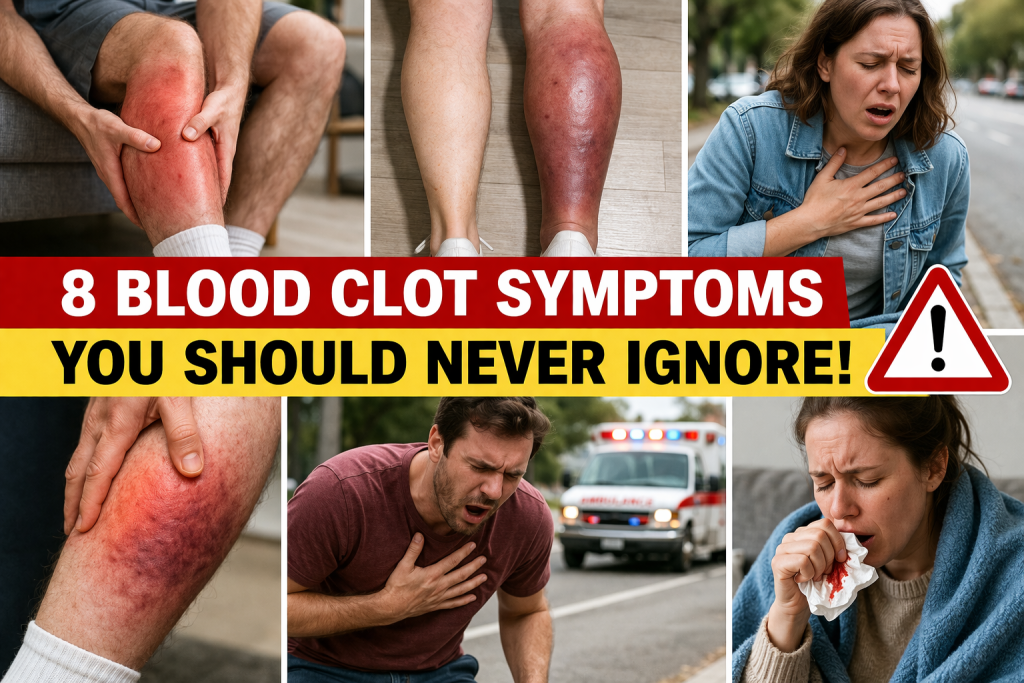
8 Blood Clot Symptoms You Should Never Ignore
Blood clots can be life-saving when they stop bleeding after an injury. But when a clot forms inside a vein without a good reason, it can block blood flow and become dangerous. Two of the most important clot-related conditions are deep vein thrombosis (DVT), which usually develops in a deep vein of the leg, and pulmonary embolism (PE), which happens when part of a clot travels to the lungs.
Some blood clots cause obvious symptoms, while others can be subtle or even silent. Knowing the warning signs can help you act quickly. Symptoms linked to DVT often affect one leg or arm, while PE symptoms usually involve breathing problems, chest discomfort, or sudden changes in heart rate.
1. Pain or tenderness in one leg
One of the most common signs of DVT is pain in the calf or lower leg. It may feel like cramping, soreness, tightness, or a persistent ache that is not explained by a recent workout or minor strain. Some people notice the discomfort gets worse when standing, walking, or flexing the foot.
What makes this symptom important is that it is often one-sided. A blood clot in the leg usually does not cause equal pain in both legs at the same time. The area may also feel tender when touched.
2. Swelling in one leg or arm
Swelling is another major clue. When a clot blocks normal blood flow, fluid can build up in nearby tissues, making the affected limb look or feel larger than the other side. This swelling can develop gradually or appear more suddenly, depending on the size and location of the clot.
You might notice that shoes feel tighter, socks leave deeper marks, or one pant leg fits differently. Swelling that affects only one limb deserves medical attention, especially when it appears with pain, warmth, or color change.
3. Red, blue, or otherwise discolored skin
A blood clot can change the color of the skin over the affected area. The skin may look red, dusky, bluish, or darker than usual, depending on your natural skin tone and how blood flow is being affected.
This change may be subtle at first. On some people, it may show up more as an area that looks unusually flushed or deeper in color rather than clearly red. When this happens together with swelling or tenderness, a clot becomes more concerning.
4. Warmth over the affected area
The skin above a clot may feel warmer than the surrounding skin. This can happen because of inflammation and changes in circulation in the blocked vein.
Warmth alone does not prove a blood clot, since infection, injury, and inflammation can also cause it. But warmth combined with one-sided pain, swelling, and skin discoloration should not be ignored.
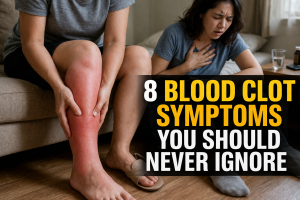
5. Sudden shortness of breath
When a clot travels to the lungs, it can cause a pulmonary embolism. One of the hallmark symptoms is sudden trouble breathing. This may start abruptly and feel out of proportion to your activity level. Some people feel breathless while walking across a room. Others feel they cannot catch their breath even at rest.
This symptom is especially urgent if it appears along with chest pain, coughing, lightheadedness, or a racing heart. Pulmonary embolism can be life-threatening and needs immediate medical care.
6. Sharp chest pain that gets worse with breathing
Chest pain from a pulmonary embolism is often described as sharp or stabbing rather than pressure-like. It commonly gets worse when you take a deep breath, cough, bend, or move.
Because chest pain can have many causes, it is not possible to tell at home whether it is related to a blood clot, a heart problem, or something else. But chest pain that comes with sudden shortness of breath or coughing up blood is an emergency.
7. A fast or irregular heartbeat
A pulmonary embolism may cause the heart to beat faster than normal. Some people notice pounding, fluttering, or a racing sensation in the chest. Others may simply feel shaky, weak, or anxious without knowing their heart rate has changed.
A fast heartbeat can happen for many reasons, including dehydration, fever, stress, or caffeine. But when it appears with breathing trouble, chest pain, or faintness, it needs urgent evaluation.
8. Coughing, especially coughing up blood
A new cough can occur with a pulmonary embolism. In some cases, the cough may produce bloody or blood-streaked mucus, called hemoptysis. This is one of the more alarming warning signs and should be treated as urgent.
Even without visible blood, a sudden unexplained cough that appears with shortness of breath or sharp chest pain should not be brushed off.
When blood clot symptoms are an emergency
Seek emergency care right away if you have any of the following:
- sudden shortness of breath
- chest pain, especially if it gets worse when breathing deeply
- coughing up blood
- fainting, severe lightheadedness, or signs of very low blood pressure
- a fast or irregular heartbeat with breathing problems or chest pain
Symptoms of DVT, such as one-sided leg swelling, pain, tenderness, warmth, or discoloration, also need prompt medical evaluation because a clot in the leg can break loose and move to the lungs.
Who is more likely to develop a blood clot?
Blood clots can happen to anyone, but the risk is higher in certain situations. Common risk factors include long periods of immobility, major surgery, hospitalization, injury, cancer, pregnancy, and estrogen-containing medications such as some birth control or hormone therapy.
Risk also rises with a personal or family history of clots and some inherited clotting disorders. Knowing your risk does not replace symptom awareness, but it can help you take warning signs more seriously.
How blood clots are diagnosed
Doctors do not diagnose a blood clot based on symptoms alone, because these symptoms can overlap with muscle injuries, infections, heart problems, and lung conditions. Depending on where the clot is suspected, evaluation may include an ultrasound, CT scan, MRI, or blood tests such as a D-dimer.
That is why self-diagnosis is risky. If you think you may have symptoms of DVT or PE, getting checked quickly matters more than trying to sort it out on your own.
FAQ
Can a blood clot cause symptoms in only one leg?
Yes. DVT commonly causes symptoms in one leg, including swelling, pain, tenderness, warmth, and skin discoloration.
Can you have a blood clot without obvious symptoms?
Yes. Some people have few symptoms or none at all, especially early on. Mayo Clinic notes that DVT can sometimes occur without noticeable symptoms.
What is the difference between DVT and pulmonary embolism?
DVT is a clot in a deep vein, usually in the leg or arm. Pulmonary embolism happens when a clot travels to the lungs. PE is a medical emergency.
Is chest pain from a blood clot always severe?
Not always. It is often sharp and may worsen with deep breathing or coughing, but severity can vary from person to person.
When should I seek immediate help?
Get urgent medical help right away for sudden shortness of breath, chest pain, coughing up blood, fainting, or severe lightheadedness.
The bottom line
Blood clot symptoms can range from subtle leg discomfort to life-threatening breathing problems. The signs most often linked to DVT include one-sided swelling, pain, tenderness, warmth, and skin discoloration. Symptoms that suggest a pulmonary embolism include sudden shortness of breath, sharp chest pain, coughing up blood, and a fast or irregular heartbeat.
Because complications can develop quickly, it is safest to treat suspicious symptoms seriously and get medical care promptly.